
Borrow Money Instantly - Fundi
Sunny Pal Singh GillFinance
4.72.58K Reviews
- Version
- 1.0.6
- Installs
- 500.00K
- Age Rating
- Everyone
Screenshots
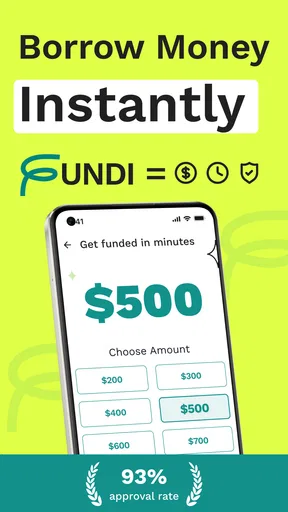

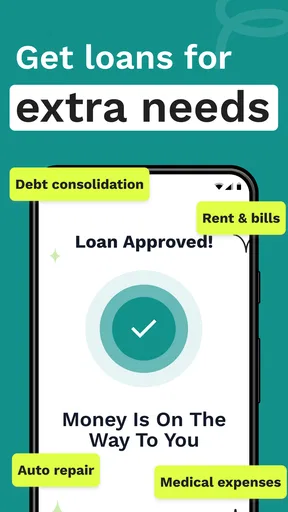
Our Review of Borrow Money Instantly - Fundi
 Analysis by Appyee
Borrowing money is already a stressful decision, so the quality of a loan app depends on more than how quickly it opens or how attractive its promise sounds. I spent time looking at Borrow Money Instantly - Fundi from that practical angle: can a person understand what they are doing, move through the process without unnecessary confusion, and use it sensibly when circumstances are difficult? My overall impression is that it is a focused finance app for people seeking a cash advance, but it should be approached as a borrowing tool rather than as a general money-management companion.
Fundi is free to install, aimed at Everyone, and works on Android devices running version 5.0 or later. It was released on May 22, 2023, and the current version is 1.0.6. The developer is Sunny Pal Singh Gill. Its store presence is substantial, with more than 500 thousand installs, about 38 thousand ratings, and a 4.7 average. Those figures suggest that many people have been willing to try it, although popularity should never replace checking the actual repayment terms before accepting a loan.
How Fundi feels to read and navigate
The first thing I would want from an instant-loan app is a clear path from the opening screen to a realistic understanding of the borrowing decision. Fundi’s identity is straightforward: it is built around getting access to money quickly, not around budgeting, investing, tracking subscriptions, or managing a bank account. That narrow purpose can be helpful when someone is under pressure because there are fewer unrelated tools competing for attention.
At the same time, a simple purpose does not automatically make a financial process easy to understand. When I review an app in this category, I look for the difference between a headline promise and the details that actually determine affordability. A fast approval message may catch the eye, but the useful information is the amount to be repaid, the timing, and the consequences of missing that timing. I would slow down at every confirmation screen rather than treating the app as a one-tap emergency button.
For readers who have difficulty reading small text or processing dense screens, the safest approach is to increase the phone’s text size before starting and use the device’s built-in display settings if needed. That is not a special Fundi feature; it is a practical way to make any finance workflow less tiring. I would also avoid applying while rushing, walking, or trying to read on a crowded bus. A larger screen and a quiet moment make it easier to distinguish an amount requested from an amount ultimately repayable.
Navigation matters especially for people who are anxious, unfamiliar with loan terminology, or using English as an additional language. I found that the app’s focused purpose makes the general task easier to identify, but the user still has to bring careful attention to each field and explanation. If a phrase is unclear, I would not guess. I would pause, look for an explanation within the relevant screen, and only continue once the meaning is understood. In finance, guessing is a usability problem with a possible financial cost.
A useful personal workflow is to write down three things before opening the application: the exact amount needed, the date on which repayment would be comfortable, and the maximum total repayment that would still fit the household budget. This prevents the interface from deciding the size of the request emotionally. It also gives users with memory or concentration difficulties an external reference instead of relying on a hurried mental calculation.
Readable decisions are more important than fast decisions
Fundi’s central appeal is speed, but speed should be measured after comprehension, not before it. I would treat the application process as successful only when I could answer, in my own words, how much I might receive, how much I would need to return, and when that return would be due. If I could not answer those questions, I would stop rather than press ahead simply because the next button was available.
This is also where the app differs from common alternatives. A traditional bank may take longer or require more established account history, but it may be familiar to the borrower and connected to existing statements. A credit card can offer flexibility for planned purchases, while a community lender or credit union may provide a conversation with a person who can explain the commitment. Fundi is more appealing when the priority is a digital, direct application, but those alternatives can be better when explanation, ongoing support, or a longer repayment structure matters more than speed.
Motor, sensory, and cognitive considerations
Using a finance app is not physically demanding in the way a game might be, but it can still create access problems. Loan applications often involve repeated tapping, typing personal details, reviewing numbers, and returning to earlier fields. Someone with limited dexterity, tremors, joint pain, or fatigue may find that a rushed form increases the chance of entering an incorrect amount or overlooking a key line.
My advice is to prepare the information first and complete the process in short, deliberate stages. Keep the phone stable, use the keyboard carefully, and review every number before moving on. If typing on a phone is uncomfortable, a larger device may be preferable. I would also avoid using voice input for sensitive financial details unless I was completely comfortable with how the device handles that input and could verify every transcribed character.
For users with low vision, the practical questions are whether text can be enlarged without cutting off essential wording and whether contrast remains comfortable. I would test the phone’s display settings on a non-sensitive screen before beginning. Screen magnification can help with small figures, but it may also hide surrounding context, so I would zoom out before confirming anything. That small habit reduces the risk of seeing a repayment amount without seeing the label attached to it.
People with hearing loss are less likely to depend on sound for a basic text-based finance task, but situational hearing limitations still matter if support or device notifications become part of the process. I would keep written records of important steps and not rely solely on a sound alert. Conversely, users who are sensitive to bright displays may prefer a dimmer environment setting and a quieter time of day, provided the text remains easy to read.
Cognitive accessibility is just as important as visual accessibility here. Financial stress narrows attention, and a person may skim instead of reading. I would recommend a two-pass method: first read the screen without entering anything, then complete the fields on a second pass. For a trusted support person, reading the key terms aloud can be useful, but the borrower should remain the person making the decision. Sharing a phone or account casually is not a good substitute for understanding the commitment.
A realistic emergency use case
Imagine a household facing an unexpected essential expense shortly before payday. The person may open Fundi because waiting for a conventional process feels impossible. In that situation, the app’s quick-loan focus can be useful as a way to explore an immediate option. My recommended sequence would be to calculate the gap first, request only the amount that solves that gap, and compare the repayment obligation with the next pay cycle before accepting anything.
The important trade-off is that solving today’s shortage can create a second shortage later. If repayment would require skipping food, transport, medicine, rent, or another essential bill, the app is not the right answer, even if approval appears convenient. I would first consider asking the service provider for more time, speaking with a bank, checking an employer advance, or contacting a local support organization. A loan application should be the last piece of a short-term plan, not the plan itself.
That scenario also shows why accessibility is broader than screen design. A person may be using a cracked phone, a weak mobile connection, a shared device, or a noisy public space. They may have limited data, low battery, or difficulty concentrating because of the emergency itself. Fundi can be more usable when the borrower prepares offline, finds a private place, and leaves enough time to read. If those conditions are not available, postponing the application until the information can be checked properly is safer than forcing the process.
Situational access and responsible use
Fundi is likely to appeal most to people who are comfortable completing financial tasks on a phone and who need to investigate a short-term borrowing option without visiting a branch. Its free availability lowers the initial barrier to trying it, and the Everyone age classification makes it broadly presented as a general-audience finance app. That does not mean every user should borrow, or that age classification answers questions about financial readiness.
For someone with an older Android phone, the minimum operating-system requirement of 5.0 or later is useful context. It may make the app available on devices that cannot run some newer applications. However, an older device can still create practical obstacles through a smaller screen, slower performance, limited storage, or an outdated keyboard. I would make sure the phone is charged and stable before starting, and I would avoid switching repeatedly between apps while entering personal information.
Users with limited digital confidence may benefit from writing down each stage and taking time to reread the final figures. A trusted person can help explain unfamiliar language, but I would never let someone else pressure me into accepting a loan or enter details without my knowledge. This is particularly important for people who share devices or depend on family members for technology assistance. Personal control is part of financial access.
Users who need an alternative language, a formal accommodation, or human guidance should consider whether a digital-only route fits their needs before investing time in the application. A bank branch, telephone service, credit union, or local advice organization may be more suitable when a person needs conversation, interpretation, or help comparing several options. Fundi’s strength is directness; directness can become a weakness when the borrower needs tailored explanation.
I would also separate “approval” from “affordability.” An app can make it easy to request money, but the ability to receive a loan does not prove that repayment will be comfortable. Before confirming, I would compare the full obligation with fixed bills and irregular costs such as transport, school expenses, or medication. If the budget works only when nothing unexpected happens, it is already too tight.
Three habits that make the app safer to use
- Set the borrowing limit before opening the app. Decide the smallest amount that solves the immediate problem, and do not raise it simply because a larger figure appears available.
- Use a written repayment check. Put the expected repayment beside the dates of income and essential bills. This catches conflicts that are easy to miss on a small screen.
- Keep a private record of the final agreement. Save the relevant confirmation or write down the amount and due date in a secure place so that memory, notifications, or a shared device are not the only reminders.
These habits are not decorative extras. They address the main weakness of instant borrowing: the interface can make a serious commitment feel like a short form. By moving the budget decision outside the app, I remain in control of the decision instead of allowing the application flow to set the pace.
Remaining barriers and where another option wins
The largest barrier is not necessarily tapping or reading; it is the information imbalance that can exist whenever someone urgently needs cash. A person in distress may focus on receiving money and underweight the repayment obligation. Fundi’s fast-approval positioning makes that risk especially important. I would judge the app favorably only when the cost and timing of repayment are plainly understandable before acceptance.
Another limitation is that an app cannot replace personal financial advice. If the same shortfall happens repeatedly, a quick loan may mask an income or expense problem rather than solve it. In that situation, a budgeting conversation, debt counselor, bank adviser, or community organization is likely to be more valuable. Fundi is better suited to a contained, genuinely temporary need than to recurring dependence.
Privacy and device control also deserve attention. I would use a personal phone where possible, avoid entering information while someone is watching, and review each permission or request presented by the device in the normal way. I would not install a finance app on a borrowed phone unless I understood how to remove personal information afterward. These are sensible precautions for any lending service, but they matter more when the user is already under pressure.
Compared with a standard bank loan, Fundi may feel less cumbersome for someone who wants to apply digitally and quickly. Compared with a credit card, it may be more appropriate for a defined cash need rather than ongoing spending, but the borrower should still compare the total cost and timing. Compared with borrowing from family, an employer, or a community lender, it may offer more privacy and independence, while losing the flexibility or personal discussion those routes can provide. The better option depends on whether the priority is speed, explanation, cost, or repayment flexibility.
I would skip Fundi if I needed a large, long-term financial solution, if I could not clearly understand the repayment commitment, or if repayment would depend on another loan. I would also skip it if I needed accessibility assistance that the phone-based process did not provide comfortably. In those cases, a human-supported alternative is not a failure; it is a better match for the situation.
My inclusive verdict
After looking at Fundi through the experience of people with different abilities and circumstances, I see a useful but narrow tool. Its focused finance purpose, free entry point, broad device compatibility, and strong public reception make it worth considering for someone who needs to explore a short-term cash advance on Android. The developer, Sunny Pal Singh Gill, has positioned it around immediacy rather than a broad suite of financial features, and that focus is both its appeal and its boundary.
My recommendation is to use Fundi as an information-and-application tool, never as a substitute for a budget. Read slowly, enlarge the display if necessary, prepare the figures beforehand, and check the repayment date against real household obligations. If you need a person to explain the commitment, if your financial problem is ongoing, or if the repayment would put essentials at risk, choose a supported alternative instead.
For the right user, Fundi can reduce the friction of investigating an urgent borrowing option. For an overwhelmed user, the same speed can encourage a decision that deserves more time. The app is therefore most inclusive when the borrower controls the pace, uses practical accessibility adjustments, and treats approval as only one part of the decision. I would recommend trying it only after that personal affordability check, and I would leave the process immediately if the terms were not clear enough to explain confidently to someone else.
Privacy and Permissions
See what permissions an app requests and how it handles your data.
- Other
- view network connections, full network access, run at startup, control vibration, prevent device from sleeping
Verdict
Strengths of Borrow Money Instantly - Fundi
- Simple application process with minimal paperwork
- Useful for handling short-term financial emergencies
- Loan details are presented before confirming the request
- Mobile access makes applying convenient from almost anywhere
- Repayment reminders can help users stay aware of due dates
Limitations of Borrow Money Instantly - Fundi
- Interest and service fees may make borrowing expensive
- Approval and loan amounts can vary by applicant
- Late payments may lead to additional charges or penalties
- Availability may depend on location and eligibility requirements
- Requires sharing personal and financial information
Similar Picks in This Category
View All
Google Wallet
Google LLC4.3

Airtel: Recharge, Bank & Loans
Airtel4.0

PayPal - Pay, Send, Save
PayPal Mobile4.2

DANA Indonesia Digital Wallet
PT Espay Debit Indonesia Koe4.5

Binance: Buy Bitcoin & Crypto
Binance Inc.4.8

Cash App
Block, Inc.4.7
Frequently Asked Questions
What is Borrow Money Instantly - Fundi, and how does it work?
Borrow Money Instantly - Fundi is a financial app designed to help eligible users request short-term funds through a mobile application. After creating an account, you generally provide personal and financial information, choose an available loan amount, and submit an application for review. Approval, loan terms, fees, and funding speed depend on the provider’s assessment and your location, so read the offer carefully before accepting it.
Can everyone qualify for a loan through Fundi?
No. Access to borrowing is not guaranteed, and eligibility may vary according to factors such as age, residency, income, employment, credit history, identity verification, and the information submitted in the app. Fundi or its lending partners may also apply additional requirements. Before applying, check the current eligibility conditions and make sure you can provide accurate documentation, since incomplete or incorrect details can delay or prevent approval.
How quickly can I receive money after applying?
The app may advertise fast applications or rapid access to funds, but the actual timing can differ considerably. Review, identity checks, lender operating hours, bank processing, weekends, and technical issues may all affect delivery. Even after approval, the money may not appear immediately in your account. Treat any stated timeframe as an estimate and confirm whether additional transfer charges or processing conditions apply.
What costs and repayment terms should I check before borrowing?
Before accepting an offer through Borrow Money Instantly - Fundi, carefully review the total repayment amount rather than focusing only on the amount received. Check the interest rate or service fee, origination charges, late-payment penalties, repayment dates, rollover rules, and any automatic debit authorization. Short-term loans can become expensive if repayment is missed, so borrow only what you can comfortably repay on time.
Is Borrow Money Instantly - Fundi safe to use?
The app may include security measures such as account authentication and encrypted data transmission, but users should still verify the official developer, privacy policy, permissions, and lender information before entering sensitive details. Download it only from a trusted app store, avoid sharing passwords or verification codes, and be cautious of requests for upfront payments. Also confirm how your personal data is collected, stored, and shared.
